People assume an Easter basket means chocolate and plastic grass. Ours have those. They also have a toothbrush.
The children who receive these baskets are in shelters, in foster care, and in programs run by food pantries and community centers. So we fill the baskets with things a family might otherwise have to buy.
A toothbrush. In almost every basket, most years. We go looking for a dental office or a bulk donor who can cover it.
Socks, when we can get them. Basic and useful, and the kind of thing that runs out fast in a shelter. Included whenever a donor can cover them in bulk.
Real snacks. Granola bars, Goldfish, anything that holds up in a backpack.
Hygiene basics. Soap, wipes, the everyday things a tight budget skips.
Toys and treats. Because it is still an Easter basket and it should feel like one.
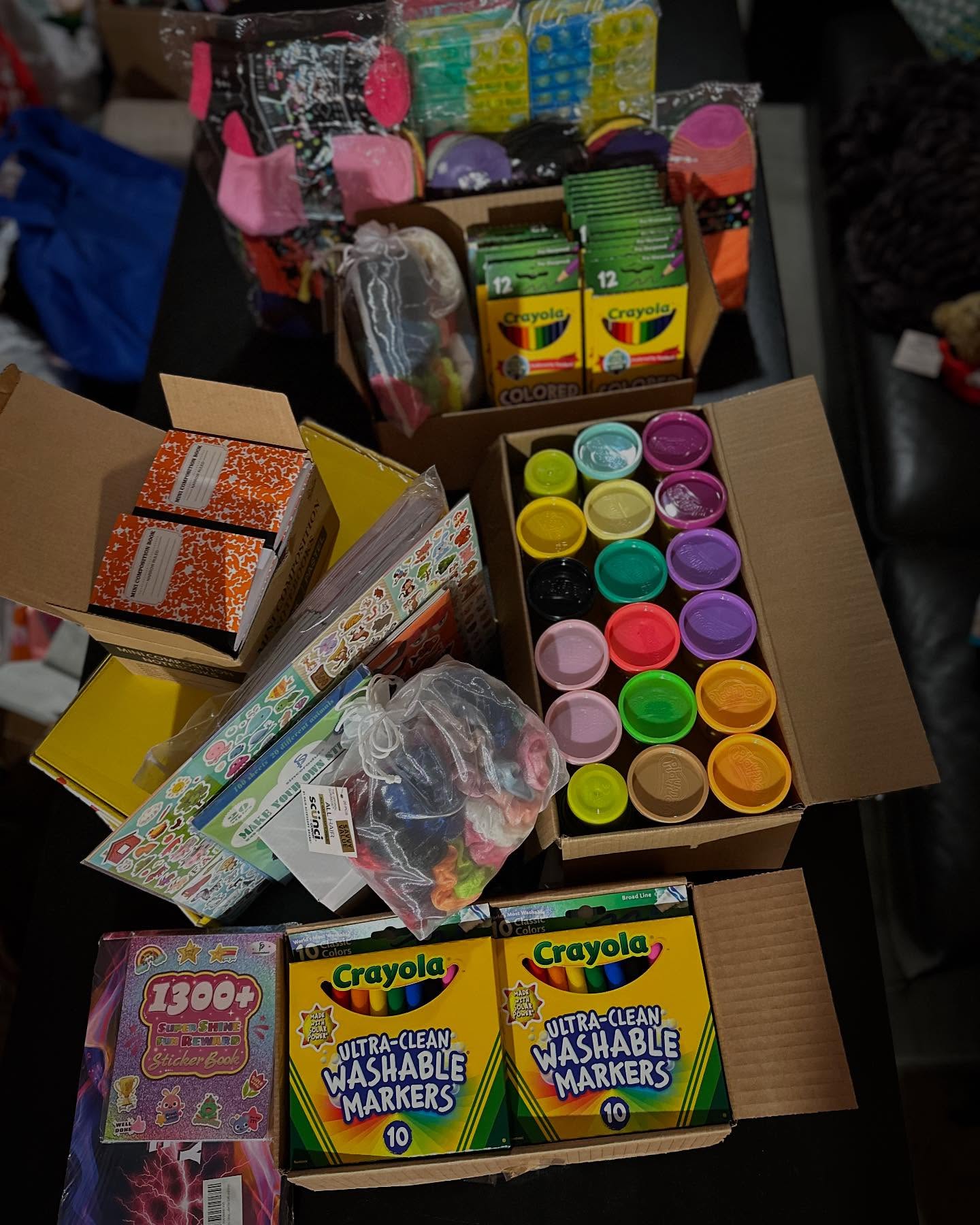
A book or an activity book. New, and matched to the age group. A notebook, coloring book or activity book counts, with crayons or a pencil so it can be used right away. Reading and drawing should not be the first thing a stretched household gives up.
Every basket is sorted into one of five age groups before it is wrapped: ages 1 to 3, 4 to 6, 7 to 9, 10 to 12, and teens. A basket for a two year old and a basket for a sixteen year old are not the same basket, and treating them the same is how you end up handing a teenager a rattle.
Teen baskets are always the hardest to fill, and they are the ones we are usually short on.
Nothing leaves without being checked against a quality control list first. Ten years of doing this has turned into a standard.
If you want to help fill one, the Amazon wishlist is the fastest way. It ships straight to us, already on the list.